

The Seedsun selection
Quercus acerifolia
SKU: QUER-ACER-01G
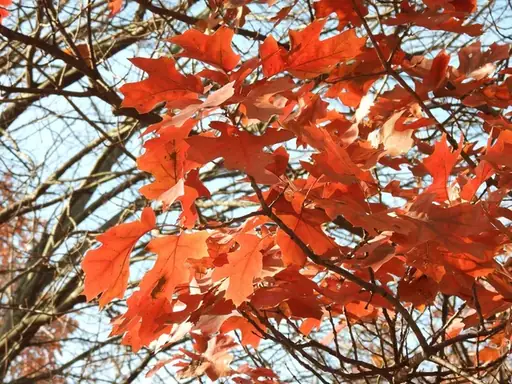
Quercus acerifolia is one of the rarest oaks in North America, and one of the most quietly beautiful. The name says the first thing you notice: acerifolia means maple-leaved, and the upper leaves really do look like a sugar maple's, often as wide as they are long, cut into three to five sharp,.
Ask for a tailored quote
Pricing, pack sizes and availability are confirmed in your personal quotation. Sending an enquiry does not place a paid order.
Ask about suitability, sowing and growing requirements.
Confirm delivery options and required documents in your quote.
About this variety
Quercus acerifolia is one of the rarest oaks in North America, and one of the most quietly beautiful. The name says the first thing you notice: acerifolia means maple-leaved, and the upper leaves really do look like a sugar maple's, often as wide as they are long, cut into three to five sharp, glossy lobes that turn deep red and burgundy in fall. A close relative of the Shumard oak, maple-leaf oak grows as anything from a stunted, multi-trunked shrub on a windswept ridge to a single-trunked tree of forty or fifty feet in cultivation.
The wild story is a precarious one. Maple-leaf oak is endemic to just a handful of high, rocky ridgetops in the Ouachita Mountains of west-central Arkansas, among them Magazine, Porter, Pryor, and Sugarloaf mountains, and nowhere else on earth. Listed as critically imperiled in Arkansas and endangered on the IUCN Red List of oaks, the species survives in the wild in only a few isolated stands, and much of the species' future rests with cultivated trees in botanic gardens and arboreta. To plant one is to take a small, direct part in that conservation.
These plants carry a good pedigree. Most maple-leaf oaks in cultivation trace back to a fine specimen at the Morton Arboretum in Illinois, and the stock was grown from seed collected from a cultivated tree at the Shaw Arboretum in Missouri, with little or no sign of the hybrid intergrade that can blur the identity of a rare oak grown near common ones. What you receive is as true to the wild species as a nursery tree is likely to be.
In the garden, give maple-leaf oak an open, sunny, sharply drained site that echoes the rocky ridgetops of the wild: a lawn specimen, a naturalistic native planting, or the anchor of a collector's oak grove, where the maple-like leaves and clean fall color can be read against the sky. Give full sun to part shade and well-drained soil, avoid heavy, wet ground, and allow room for a slow tree of twenty to forty feet. Like all oaks, the tree quietly feeds a world of insects and birds, and pairs naturally with other well-drained-soil natives.
More to discover



Questions & discussion