

The Seedsun selection
Quercus geminata
SKU: QUER-GEMI-01G
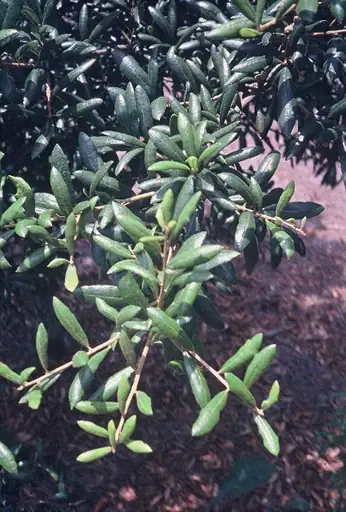
Sand live oak is the live oak of the sandhills, a tough, evergreen cousin of the great Southern live oak scaled for drier, leaner ground. Where Quercus virginiana spreads into a vast shade tree, this species usually stays a small tree or even a shrub, dark and dense and salt-proof, holding leathery.
Ask for a tailored quote
Pricing, pack sizes and availability are confirmed in your personal quotation. Sending an enquiry does not place a paid order.
Ask about suitability, sowing and growing requirements.
Confirm delivery options and required documents in your quote.
About this variety
Sand live oak is the live oak of the sandhills, a tough, evergreen cousin of the great Southern live oak scaled for drier, leaner ground. Where Quercus virginiana spreads into a vast shade tree, this species usually stays a small tree or even a shrub, dark and dense and salt-proof, holding leathery evergreen leaves through the year on the deep, dry sands of the coastal plain.
The two are close kin, long lumped together, and the telling differences are worth knowing. The leaves of sand live oak are strongly rolled under at the edges and often puckered, gray and felted beneath, and the acorns come in pairs on a slender stalk, which is exactly what the name geminata, twinned, records. Native from coastal Carolina down through Florida and west along the Gulf, the tree keeps to deep sandy soils, scrub, and dunes where few other oaks will thrive.
For a well-drained, sun-baked, or seaside site, few evergreens are tougher. Sand live oak takes drought, heat, salt spray, and wind in stride, grows slowly to a rounded twenty to forty feet, and asks almost nothing once established, hardy through USDA zones 7 to 10. Like all the oaks, the tree earns a place ecologically many times over: the paired acorns feed deer, turkey, jays, and squirrels, and the foliage hosts the caterpillars of hairstreaks, duskywings, and the great imperial moth.
Where a live oak would simply grow too large, sand live oak makes the graceful substitute, an evergreen specimen or shade tree for a smaller, drier lot, a coastal windbreak, or a xeric native planting. The catkins are inconspicuous in spring, the interest all in the year-round canopy and the character of an old, gnarled trunk. Native peoples ground acorns like these into meal once the bitter tannins were leached away, one more thread in the long human history of the oaks.
More to discover



Questions & discussion