

The Seedsun selection
Rhaphiolepis umbellata 'Blueberry Muffin'
SKU: RHAP-UMBE-BLUE-MUFF-01G
Rhaphiolepis umbellata is the hardiest of the Yeddo hawthorns, an evergreen member of the rose family (Rosaceae) that grows wild on the sea cliffs and coastal thickets of Japan and Korea. The genus name joins the Greek raphis, a needle, with lepis, a scale, a nod to the narrow bracts beneath the.
Ask for a tailored quote
Pricing, pack sizes and availability are confirmed in your personal quotation. Sending an enquiry does not place a paid order.
Ask about suitability, sowing and growing requirements.
Confirm delivery options and required documents in your quote.
About this variety
Rhaphiolepis umbellata is the hardiest of the Yeddo hawthorns, an evergreen member of the rose family (Rosaceae) that grows wild on the sea cliffs and coastal thickets of Japan and Korea. The genus name joins the Greek raphis, a needle, with lepis, a scale, a nod to the narrow bracts beneath the flower clusters, while the species epithet umbellata describes the way the blossoms gather into rounded, umbel-like heads. Western gardeners know the shrub as Indian hawthorn, a slightly misleading name, since the plant hails from East Asia rather than the subcontinent and is no true hawthorn at all.
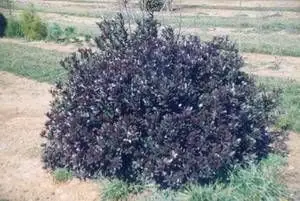
'Blueberry Muffin' is a superior selection introduced by the J.C. Raulston Arboretum in Raleigh, North Carolina, chosen for two virtues that set this clone apart: an unusually generous crop of round, blue-black fruit, the trait that earned the whimsical name, and a constitution more cold hardy than most of the species. The leathery, glossy leaves emerge gray-green, deepen to a lustrous blue-green through summer, then flush maroon and smoky purple as the temperature drops, so the shrub carries quiet color through winter. Just as valuable to Southern gardeners, the foliage shrugs off the Entomosporium leaf spot that disfigures so many Indian hawthorns.
Back in the shrub's homeland the plant carries a much older story. The Japanese call this species Sharinbai, the wheel plum, for the way the leaves whorl around the stem like spokes and the flowers echo the five petals of a plum; on Amami Oshima, where the tale runs deepest, the plant is known as Techigi. For more than a thousand years, dyers there have cut and simmered the tannin-rich bark for ten or twelve hours to draw out a warm brown liquor, then dipped silk threads through the dye dozens of times before setting the color in iron-rich mud. The result is Oshima tsumugi, a lustrous, hard-wearing pongee patterned in intricate ikat and named a National Traditional Craft of Japan in 1975. Few landscape shrubs can claim so textile a heritage.
In the garden the shrub earns a place as a well-mannered evergreen of modest size, four to six feet in most settings, with a tidy mounded habit that asks almost nothing of the pruners. Clusters of faintly fragrant white flowers open in April and May and give way to the signature blue fruit, which the birds eventually find. Salt spray, drought, and cramped root runs leave the plant unbothered, so 'Blueberry Muffin' is a natural for coastal plantings, low hedges, foundation groupings, and containers, where the winter-purpled leaves read beautifully against gray stone or weathered wood. Pair the shrub with dwarf yaupon, muhly grass, or a skirt of hardy rosemary for a planting that holds its looks through every season.
More to discover



Questions & discussion