

The Seedsun selection
Rhododendron canescens
SKU: RHOD-CANE-01G
Rhododendron canescens, the Piedmont azalea, is very likely the most widespread of all the wild deciduous azaleas of the Southeast, ranging through the Piedmont, coastal plain, and stream edges from the mid-Atlantic to the Gulf. Country people have long called the plant the Southern pinxter or.
Ask for a tailored quote
Pricing, pack sizes and availability are confirmed in your personal quotation. Sending an enquiry does not place a paid order.
Ask about suitability, sowing and growing requirements.
Confirm delivery options and required documents in your quote.
About this variety
Rhododendron canescens, the Piedmont azalea, is very likely the most widespread of all the wild deciduous azaleas of the Southeast, ranging through the Piedmont, coastal plain, and stream edges from the mid-Atlantic to the Gulf. Country people have long called the plant the Southern pinxter or simply wild honeysuckle, for the sweet, honeysuckle-like scent of the flowers. The species name canescens means becoming gray or hoary, a reference to the soft gray down that coats the undersides of the leaves and the new growth.
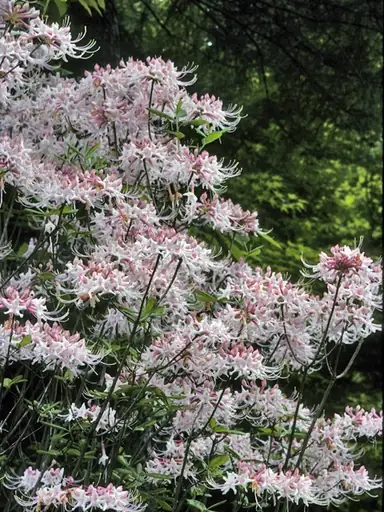
In early spring, often before the leaves, the shrub opens clusters of fragrant, trumpet-shaped flowers in pale pink to white, each bloom carrying long, gracefully curving stamens that reach out to passing hummingbirds, bees, and butterflies. The fragrance drifts through the still-bare woods like a quiet benediction, and because the plant blooms so early it lights up shady margins while the canopy is still opening overhead. Summer leaves mature to deep green and turn burgundy red in autumn, a second, quieter season of color.
The Piedmont azalea is a true creature of the Southern woods, spreading gently by root suckers into soft, drifting colonies that bloom in chorus each spring, never invasively. Grown for generations as a bush honeysuckle for scent and spring color, the plant belongs to the eye and the nose rather than the table: like all Rhododendron, the leaves and nectar carry grayanotoxins and are not edible. Because canescens is so widespread and so willing, the species readily hybridizes with other native azaleas blooming nearby, which is part of what makes the wild Southern azaleas so endlessly varied.
Upright, open, and multi-stemmed, reaching six to fifteen feet in time with a spread to match, the Piedmont azalea naturalizes beautifully at the woodland edge, in an understory planting, or in a loose native drift. Give dappled or filtered shade, a moist but well-drained, acidic soil rich in humus, and a cool mulch, keeping in mind that the plant resents soggy ground even as it loves moisture. Combine with ferns, native phlox, and other deciduous azaleas for a fragrant, layered spring. Additional photos courtesy of Alan Cressler and Sally and Andy Wasowski.
More to discover



Questions & discussion