

The Seedsun selection
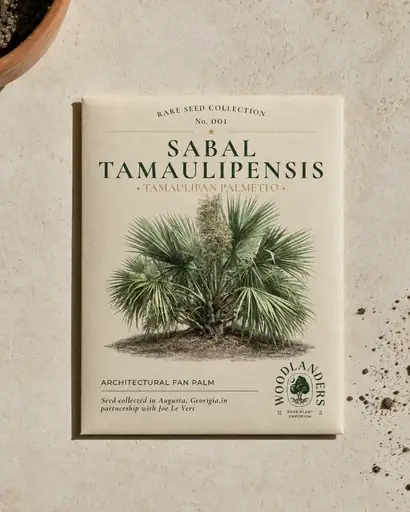
Sabal tamaulipensis
SKU: SABA-TAMA-SEED
Sabal tamaulipensis is a solitary fan palm from the dry limestone hills of northeastern Mexico, where the species climbs the San Carlos Mountains of Tamaulipas and neighboring Nuevo Leon. Stiff, rounded, blue-green fans are held on arching stalks above a trunk that stays short for many years, so.
Ask for a tailored quote
Pricing, pack sizes and availability are confirmed in your personal quotation. Sending an enquiry does not place a paid order.
Ask about suitability, sowing and growing requirements.
Confirm delivery options and required documents in your quote.
About this variety
Sabal tamaulipensis is a solitary fan palm from the dry limestone hills of northeastern Mexico, where the species climbs the San Carlos Mountains of Tamaulipas and neighboring Nuevo Leon. Stiff, rounded, blue-green fans are held on arching stalks above a trunk that stays short for many years, so young plants read as a fountain of palmate leaves close to the ground. In habitat the palm can eventually reach fifteen to twenty feet, though cultivated plants are slow and often stay compact, and older specimens sometimes recline on a horizontal trunk rather than standing straight. Small, fragrant, creamy flowers give way to round black fruit in the wild.
The path to a name was long. Carl Schoenfeld and John Fairey of the pioneering Yucca Do Nursery first collected the palm on expeditions into the mountains of Tamaulipas in the late 1980s, puzzled by trunkless sabals that ran along the limestone rather than standing upright, and offered the earliest seed-grown plants in their 1990 catalog. For years the plant passed among collectors as Sabal sp. Tamaulipas, prized for cold tolerance to rival dwarf palmetto yet dismissed by some authorities as merely a Mexican form of Sabal minor. Only after DNA work confirmed a distinct sister species did the palm earn formal standing: Ayress Grinage, then a doctoral student at Cornell University, described Sabal tamaulipensis with coauthors K. A. Peralta and M. M. Salinas-Rodriguez in Palms, the journal of the International Palm Society, in September 2025, drawing the type specimen from a plant grown at Tony Avent's Juniper Level Botanic Garden.
The names carry their own histories. The genus name Sabal is an old botanical puzzle, a word whose origin was never explained by the author who first coined the term, while the epithet tamaulipensis simply means of Tamaulipas, the northeastern Mexican state that shelters the largest wild stands. These seeds are ' first seed offering in decades, and a chance to grow one of the newest and least common hardy palms from the very beginning.
Palms in the genus Sabal have long been woven into daily life across their range. Related species such as the cabbage palmetto gave the Seminole the broad fans that thatched their chickees, along with leaves for hats, mats, and baskets, a craft that continues in Gullah communities of the Southeast. The fruit fed many Indigenous peoples, dried and ground into a sweet, prune-flavored meal, and the tender growing bud was eaten as heart-of-palm, a harvest that kills the palm. Little of this tradition is recorded for the Tamaulipas palmetto specifically, a plant known to science only recently, yet the kinship places the species in one of the most useful genera of the Americas.
In the garden, the Tamaulipas palmetto offers something uncommon: a true fan palm for gardeners in zones eight and warmer who thought palms were beyond their reach. The blue-green fans bring architecture to a gravel garden, a courtyard, or a dry Mediterranean bed, and the roots, schooled on limestone, shrug off drought and alkaline soil once settled in. Pair the palm with agaves, yuccas, hardy cacti, and bold ornamental grasses for a xeric planting with real presence, and site young plants where their slow, deliberate growth can be admired up close. Patience is the price of admission, and the reward is a rare palm few neighbors will recognize.
More to discover



Questions & discussion