

The Seedsun selection
Sarcococca ruscifolia
SKU: SARC-RUSC-01G
Sarcococca ruscifolia, the fragrant sweet box, is an evergreen shrub of the boxwood family, native to China and East Asia, grown for a winter perfume that belies the tiny flowers that carry it. In late winter and early spring the small, creamy white flowers open along the glossy stems, easy to.
Ask for a tailored quote
Pricing, pack sizes and availability are confirmed in your personal quotation. Sending an enquiry does not place a paid order.
Ask about suitability, sowing and growing requirements.
Confirm delivery options and required documents in your quote.
About this variety
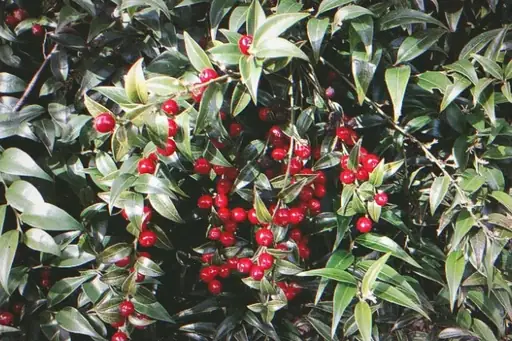
Sarcococca ruscifolia, the fragrant sweet box, is an evergreen shrub of the boxwood family, native to China and East Asia, grown for a winter perfume that belies the tiny flowers that carry it. In late winter and early spring the small, creamy white flowers open along the glossy stems, easy to overlook by eye but powerfully sweet on the air, and unlike the black-fruited sweet boxes, this species follows the flowers with glowing red berries.
The plant makes a compact, dense mound three to five feet tall, clothed in glossy, dark green, pointed leaves that hold their polish the year round. The epithet ruscifolia means with leaves like Ruscus, the butcher's broom, a nod to the firm, tapering foliage, and the red berries set the species apart from its black-berried relatives.
Thriving in full to partial shade, this low-maintenance, pest- and disease-resistant shrub asks only for humus-rich, well-drained soil and little pruning, and is happy in the difficult shade beneath trees, along a north wall, or in a shaded courtyard. Compact and deer-resistant, the fragrant sweet box works as a low hedge, a foundation planting, a shaded border, or even a large-scale groundcover.
Site Sarcococca ruscifolia where the winter scent and the red berries can both be enjoyed at close range, by a door, along a shaded path, or under a window, and pair with ferns, hellebores, and other shade companions, underplanted with early bulbs. Year-round foliage, midwinter fragrance, and red winter fruit make the plant a quiet asset in any shaded garden. Photo courtesy of Exploring Colour.
More to discover



Questions & discussion