

The Seedsun selection
Sinningia sellovii
SKU: SINN-SELL-01Q
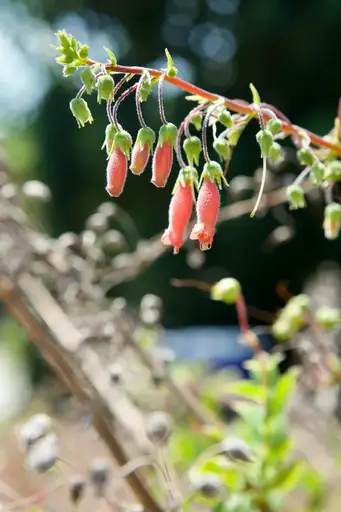
Gesneriads are supposed to be houseplants. Somebody should tell Sinningia sellovii, which comes out of a hard woody tuber the size of a fist, throws arching stems three or four feet long, hangs them with scarlet tubular flowers from early summer until frost, and then dies back to the ground and.
Ask for a tailored quote
Pricing, pack sizes and availability are confirmed in your personal quotation. Sending an enquiry does not place a paid order.
Ask about suitability, sowing and growing requirements.
Confirm delivery options and required documents in your quote.
About this variety
Gesneriads are supposed to be houseplants. Somebody should tell Sinningia sellovii, which comes out of a hard woody tuber the size of a fist, throws arching stems three or four feet long, hangs them with scarlet tubular flowers from early summer until frost, and then dies back to the ground and does the whole thing again the following year in USDA zone 7b. Gardeners who know the family only through florist gloxinias tend to find this genuinely disorienting, which is a good reason to grow the plant near the front gate.
The species is Brazilian, from the drier southern grasslands and rocky ground, and the tuber is the key to everything else. Water is stored underground, the top growth is expendable, and the plant treats winter dormancy as an ordinary annual event rather than a crisis. That combination gives you something unusual: a plant with the flowers of the tropics and the habits of a prairie perennial. The flowers themselves are narrow scarlet trumpets, freckled darker inside, dangling in a long procession down each arching stem, and they are shaped for exactly one visitor. Hummingbirds work the stems steadily from June onward, and in a good year the traffic is the point of the planting.
Both halves of the name are commemorations. Sinningia honors Wilhelm Sinning, head gardener at the Bonn botanic garden in the early nineteenth century, who grew and distributed much of what Europe first knew of the family. Sellovii remembers Friedrich Sellow, the German botanist who spent nearly two decades collecting across Brazil and Uruguay, sent tens of thousands of specimens back to Berlin, and drowned in the Rio Doce in 1831 with most of the work still unpublished. A great many South American plants carry that name; this is one of the better ones to have it.
Give the plant full sun to part shade in gritty, well-drained ground, and site where people walk, because the flowers hang and want to be seen from below rather than looked down on. A raised bed, a wall top, a slope, or a large container all suit. Water moderately in growth and keep the tuber dry in dormancy; wet winter soil is what kills, not cold. Cut the spent stems to the ground after frost blackens them and mark the spot, since the tuber is slow to wake and easy to dig up by accident in spring. Pair with agaves, gaura, muhly grass, and the drier salvias for a hummingbird corner that carries through the hottest weeks of the year, and expect the whole performance to improve as the tuber thickens with age.
More to discover



Questions & discussion