

The Seedsun selection
Smilax pumila
SKU: SMIL-PUMI-01G
Dwarf greenbrier is the gentlest member of a prickly clan. Where most of the greenbriers, the Smilax vines, arm themselves with vicious hooks, Smilax pumila comes up soft and unarmed, a low, scrambling, evergreen groundcover of the Southeastern coastal plain, safe to handle and easy to place. The.
Ask for a tailored quote
Pricing, pack sizes and availability are confirmed in your personal quotation. Sending an enquiry does not place a paid order.
Ask about suitability, sowing and growing requirements.
Confirm delivery options and required documents in your quote.
About this variety
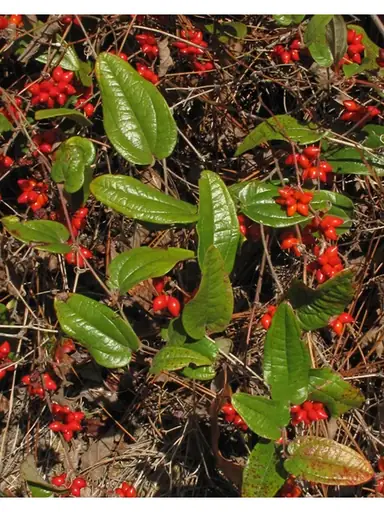
Dwarf greenbrier is the gentlest member of a prickly clan. Where most of the greenbriers, the Smilax vines, arm themselves with vicious hooks, Smilax pumila comes up soft and unarmed, a low, scrambling, evergreen groundcover of the Southeastern coastal plain, safe to handle and easy to place. The mottled, arrow-shaped leaves hold a quiet, marbled green through the year, and on female plants clusters of bright orange to red berries glow in the winter undergrowth like drops of fire.
A member of the greenbrier family, Smilacaceae, dwarf greenbrier grows wild in the pine forests and post-oak woods of the coastal plain, where the soil is fast-draining, sandy, and low in nutrients. Rather than climbing, the plant creeps and scrambles at ground level, spreading slowly into a low evergreen mat that makes a fine, thornless groundcover for the dry, partly shaded, sandy places that defeat fussier plants.
The greenbriers carry a long ethnobotanical record, and dwarf greenbrier is no exception. The rhizomes have been used in folk medicine to ease rheumatism, and the roots, like those of the true sarsaparillas, were brewed as a tonic and used to flavor root beer and other drinks, a use that gave the plant the name sarsaparilla vine across parts of the South. Native peoples across the greenbriers' range brewed the roots for teas and gathered the tender young shoots as a cooked green.
In the garden, use dwarf greenbrier as a low, evergreen, thornless groundcover in a woodland or native planting, a wildlife garden, or a dry, sandy, partly shaded bank where the marbled leaves and winter berries earn their place and the creeping habit binds loose soil. The berries feed birds and small wildlife, and the thornless stems make the plant a rare greenbrier safe to plant beside a path. Give sandy, acidic, well-drained soil and part shade, and let the mat fill in slowly.
Photo courtesy of Alan Cressler.
More to discover



Questions & discussion