

The Seedsun selection
Tamarix ramosissima ‘Rubra’
SKU: TAMA-RAMO-RUBR-01G
Imagine a shrub that looks like a conifer caught in an airy, pink-flowering daydream. Tamarix ramosissima, often called tamarisk or saltcedar, is a deciduous shrub or small tree with fine, scale-like leaves that read as cedar from ten feet away, yet drop in winter. That contradiction is the charm:.
Ask for a tailored quote
Pricing, pack sizes and availability are confirmed in your personal quotation. Sending an enquiry does not place a paid order.
Ask about suitability, sowing and growing requirements.
Confirm delivery options and required documents in your quote.
About this variety
Imagine a shrub that looks like a conifer caught in an airy, pink-flowering daydream. Tamarix ramosissima, often called tamarisk or saltcedar, is a deciduous shrub or small tree with fine, scale-like leaves that read as cedar from ten feet away, yet drop in winter. That contradiction is the charm: conifer-like texture on a plant that is no conifer at all.
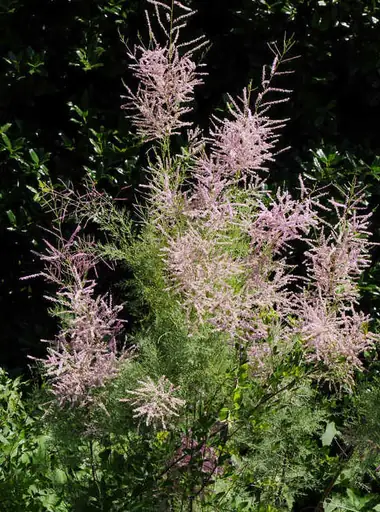
'Rubra' is grown for rosy-pink, plume-like panicles that dress the branch tips in late spring, often carrying on into early summer. The bloom effect is soft, hazy, and surprisingly luminous, like pink smoke caught in the branches and drawn as a veil through silver-green foliage. Backlit by late afternoon sun, the flowering sprays glow with a translucent quality.
Native across a broad band of Eurasia, from southeastern Europe through western and central Asia, the tamarisks evolved where water comes and goes, soils turn alkaline or salty, winds are constant, and summers punish. That heritage explains a legendary toughness: few ornamental shrubs match tamarisk for tolerance of salinity, drought, wind, and lean, difficult ground, which is why the plant became a staple of coastal exposures and hard, dry sites.
That same resilience carries a serious caveat. Away from the garden, tamarisk is one of the most aggressive woody invaders of the American West, crowding out native vegetation, drawing down water tables, and salting the soil along rivers and washes.
Important legal and ecological note
Tamarix ramosissima is regulated as a noxious weed in a number of areas because of that invasive behavior, including under North Dakota law, where distribution and sale are prohibited and landowners are required to control or eradicate the plant. Please check local regulations before purchasing or planting, especially in western states and anywhere near waterways.
Photo courtesy of the JC Raulston Arboretum.
More to discover



Questions & discussion