

The Seedsun selection
Tripterygium regelii
SKU: TRIP-REGE-01G
Tripterygium regelii is a big, rambling, almost vine-like shrub from the temperate woodlands of Japan, Korea, and Manchuria, closely related to the celebrated thunder god vine of Chinese medicine. The genus name is a piece of plain description: from the Greek treis, three, and pteryx, a wing, for.
Ask for a tailored quote
Pricing, pack sizes and availability are confirmed in your personal quotation. Sending an enquiry does not place a paid order.
Ask about suitability, sowing and growing requirements.
Confirm delivery options and required documents in your quote.
About this variety
Tripterygium regelii is a big, rambling, almost vine-like shrub from the temperate woodlands of Japan, Korea, and Manchuria, closely related to the celebrated thunder god vine of Chinese medicine. The genus name is a piece of plain description: from the Greek treis, three, and pteryx, a wing, for the papery three-winged fruits that hang in pale green clusters after flowering. The species honors Eduard von Regel, the nineteenth-century botanist who directed the St. Petersburg botanical garden. The English name, Regel's threewingnut, keeps both the man and the winged nutlet in view.
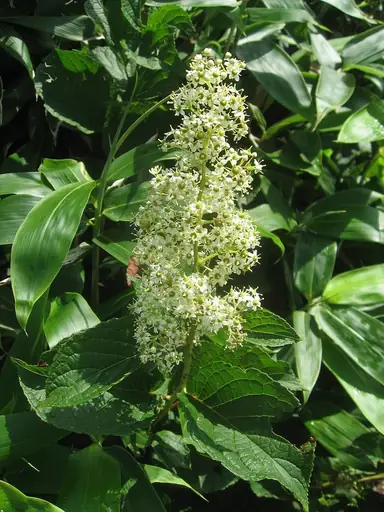
This is a plant built to scramble. The reddish, warty stems climb fast and far, reaching twenty to thirty feet where a strong support allows, so the shrub reads more like a woody vine than a tidy bush. Deciduous leaves clothe the stems through the season, and in summer the plant carries large, loose panicles of small greenish to yellowish-white flowers, followed by the winged fruits that give the genus its name. Regel's threewingnut remains uncommon in American gardens, a collector's plant that wants room and something to lean on.
The genus carries a long and cautionary history in East Asian medicine. Root preparations of Tripterygium have been used in China, Korea, and Japan against inflammatory complaints, and modern laboratories have taken a serious interest in the plant's compounds for arthritis, immune disorders, and fertility research. That interest comes with a hard warning, since every part of the plant is genuinely poisonous, and a root extract has long served as an insecticide. This is a plant to admire and study, not to handle carelessly or to eat.
In the garden, treat Regel's threewingnut as a fast, large-scale climber for a sturdy pergola, an arbor, a strong fence, or an old tree the stems can ramble through, in full sun to part shade and moist, well-drained soil. Give the plant real room, since the vigorous growth will overwhelm a flimsy trellis, and site the planting away from where children or livestock might be tempted by the fruit. For the collector of unusual woody plants, few climbers carry a stranger blend of ornament, history, and outright botanical curiosity.
More to discover



Questions & discussion