

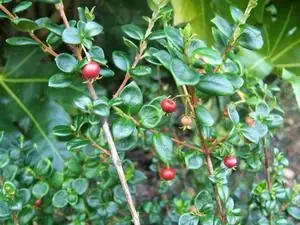
The Seedsun selection
Ugni molinae
SKU: UGNI-MOLI-01G
Ugni molinae, the Chilean guava, is a small evergreen shrub of the myrtle family, native to the temperate forests of Chile and adjoining southern Argentina. Gardeners of an older generation will know the plant as Myrtus ugni, the name the shrub long circulated under. The genus name Ugni comes.
Ask for a tailored quote
Pricing, pack sizes and availability are confirmed in your personal quotation. Sending an enquiry does not place a paid order.
Ask about suitability, sowing and growing requirements.
Confirm delivery options and required documents in your quote.
About this variety
Ugni molinae, the Chilean guava, is a small evergreen shrub of the myrtle family, native to the temperate forests of Chile and adjoining southern Argentina. Gardeners of an older generation will know the plant as Myrtus ugni, the name the shrub long circulated under. The genus name Ugni comes straight from uñi, the Mapuche word for the plant, while the species honors Juan Ignacio Molina, the Jesuit naturalist who first chronicled the flora of Chile; in the plant's homeland the shrub is simply murta or murtilla.
Small, glossy, leathery leaves clothe the shrub in dense, aromatic evergreen texture, and in late spring nodding white to pale-pink bells hang among them, sweet-scented and thick with stamens. What follows is the whole point of the plant: small round berries, dusky red when ripe, tasting of strawberry and cranberry with a resinous, wild-honey warmth. Chileans call the fruit murta, steep the berries into the liqueur murtado, cook them into jam and kuchen, and pair them with quince, while English gardeners simply call the fruit delicious.
The Chilean guava carries a small, famous piece of horticultural legend. Introduced to England in the 1840s by the plant hunter William Lobb, the fruit is said to have become a favorite of Queen Victoria, who reportedly had the berries brought up from Cornwall for the royal table. The Mapuche people had long gathered murtilla from the wild for food and for aromatic leaf infusions, and the plant remains a cherished country fruit across southern Chile, harvested from wild and tended stands alike.
In the garden the Chilean guava earns a place as a neat, fine-textured evergreen for a sunny border, a low informal hedge, an edible landscape, or a large container. Still barely known in the southern United States, though better established in the Pacific Northwest, the shrub is worth trying in zones 8 and 9, ideally in sandy, acid, well-drained soil with shelter from fierce afternoon sun where summers turn hot. Give the plant a warm, bright spot and the reward is a handsome evergreen that also fills a bowl with one of the finest small fruits a temperate garden can ripen.
More to discover



Questions & discussion