

The Seedsun selection
Vaccinium arboreum
SKU: VACC-ARBO-01G
Vaccinium arboreum, the sparkleberry, is the giant of the blueberry clan, a large shrub or small tree native across the southeastern and south-central United States, from Virginia to Florida and west to Texas. The species name arboreum means tree-like, and an old specimen earns it, rising to twenty.
Ask for a tailored quote
Pricing, pack sizes and availability are confirmed in your personal quotation. Sending an enquiry does not place a paid order.
Ask about suitability, sowing and growing requirements.
Confirm delivery options and required documents in your quote.
About this variety
Vaccinium arboreum, the sparkleberry, is the giant of the blueberry clan, a large shrub or small tree native across the southeastern and south-central United States, from Virginia to Florida and west to Texas. The species name arboreum means tree-like, and an old specimen earns it, rising to twenty or twenty-five feet on a gnarled, contorted frame. The folk names sparkleberry and farkleberry both nod to the small, glossy, glinting black fruits, and the plant is sometimes called tree huckleberry or winter huckleberry for the leaves that linger late.
Small, glossy, leathery leaves give the sparkleberry a fine, refined texture, coloring red and purple in autumn and holding evergreen in the warm South while dropping farther north. The real treasure, though, is the bark: smooth and exfoliating in cinnamon, brown, and orange, wrapped around branches that twist and lean with age into a living sculpture. A large old sparkleberry, thoughtfully limbed up, has the quiet drama of a well-grown crape myrtle or stewartia, and rewards artistic pruning as few native shrubs do.
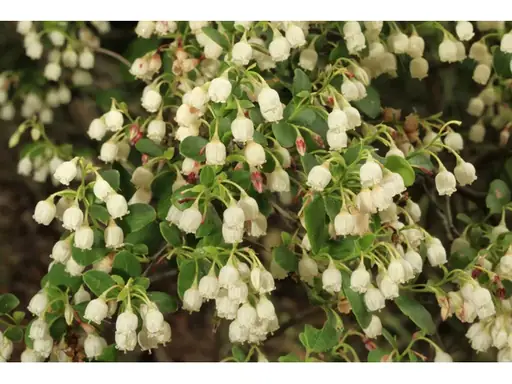
In spring the branches hang with small, fragrant, white, bell-shaped flowers, urn-mouthed like all the blueberries and busy with early bees, followed by small black berries. This is a true Vaccinium, but the fruit is dry and hard rather than sweet, prized by birds and wildlife rather than people. Where the berry did enter human use, it was as folk medicine: an astringent decoction of the leaves or bark was taken for sore throats and loose bowels, and the juice for stubborn cases of dysentery, a use rooted in the plant's high tannin content.
Give the sparkleberry a sunny to lightly shaded spot in well-drained, sandy, acid soil, where the plant shrugs off heat and drought once settled, and let a specimen develop as a lawn accent, a woodland-edge small tree, or the sculptural anchor of a native planting. Nurseries rarely offer the plant, though the species is native and widespread across the southern states, and gardeners increasingly value the sparkleberry as a tough, higher-pH-tolerant rootstock for cultivated blueberries. Additional photos courtesy of Alan Cressler and Sandy and Andy Wasowski.
More to discover



Questions & discussion