

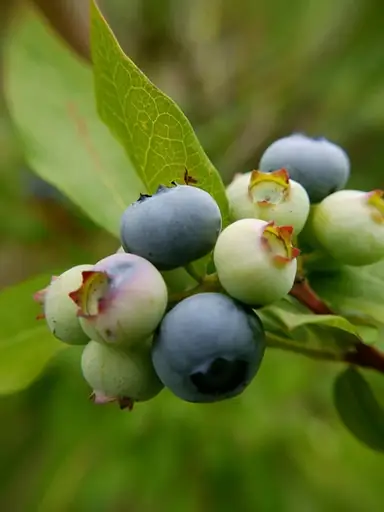
The Seedsun selection
Vaccinium ashei 'Big Fruit'
SKU: VACC-ASHE-BIG-FRUI-01G
Sold as a 3-gallon plant, pick up only.The rabbiteye blueberry is the blueberry of the South, a big, tough, heat-loving shrub native from the Carolinas to the Gulf, long grown as Vaccinium ashei and now often filed under Vaccinium virgatum. The odd common name comes from the fruit: rabbiteye.
Ask for a tailored quote
Pricing, pack sizes and availability are confirmed in your personal quotation. Sending an enquiry does not place a paid order.
Ask about suitability, sowing and growing requirements.
Confirm delivery options and required documents in your quote.
About this variety
Sold as a 3-gallon plant, pick up only.
The rabbiteye blueberry is the blueberry of the South, a big, tough, heat-loving shrub native from the Carolinas to the Gulf, long grown as Vaccinium ashei and now often filed under Vaccinium virgatum. The odd common name comes from the fruit: rabbiteye berries blush pink before they ripen, a soft pink eye that darkens to dusky blue, and the color was thought to resemble the eye of an albino rabbit. The species name ashei honors William Willard Ashe, the Southern forester and botanist who did so much early work on the region's flora.
'Big Fruit' is bred, as the name promises, for size. Where many rabbiteyes offer modest handfuls, this selection hangs heavy clusters of large, plump berries that weigh down the canes by midsummer, dusky blue and sweet with the mild tartness rabbiteyes are loved for. The fruit is as good eaten straight from the bush as baked into a pie or set up as preserves, the kind of harvest that once filled the jars along a farmhouse pantry shelf.
The shrub grows upright, vigorous, and productive, well suited to an orchard row, a homestead corner, or the back of an edible border. Rabbiteyes want full sun and the acid, sandy, well-drained soil of their native ground, and while 'Big Fruit' will set some fruit alone, the heaviest crop follows cross-pollination, so plant a second rabbiteye such as 'Climax,' 'Brightwell,' or 'Powderblue' nearby to fill the buckets.
Beyond the harvest, the rabbiteye earns a place for the year: white, bell-shaped spring flowers that feed the first bees, clean green summer foliage, and a warm flush of red and orange in fall. Give the plant a sunny, acid bed, a pine-straw mulch to keep the shallow roots cool, and a partner for pollination, and the reward is a Southern heirloom fruit renewed with every summer.
More to discover



Questions & discussion