

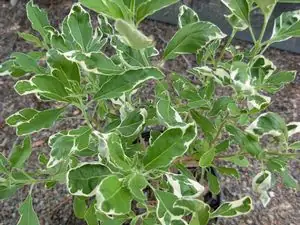
The Seedsun selection
Vitex trifolia 'Variegata'
SKU: VITE-TRIF-VARI-01G
A brightly variegated cousin of the chaste tree, grown for foliage as much as flower. Vitex trifolia, sometimes called the three-leaf chaste tree or Arabian lilac, is a warm-climate shrub of the mint family, native along tropical and subtropical coasts from eastern Africa through southern Asia to.
Ask for a tailored quote
Pricing, pack sizes and availability are confirmed in your personal quotation. Sending an enquiry does not place a paid order.
Ask about suitability, sowing and growing requirements.
Confirm delivery options and required documents in your quote.
About this variety
A brightly variegated cousin of the chaste tree, grown for foliage as much as flower. Vitex trifolia, sometimes called the three-leaf chaste tree or Arabian lilac, is a warm-climate shrub of the mint family, native along tropical and subtropical coasts from eastern Africa through southern Asia to Australia and the Pacific. The species name trifolia points to the leaves, usually held in threes, and the selection 'Variegata' edges each gray-green leaflet in creamy white for a cool, luminous effect.
Through the warm months and into early autumn, slender spikes of soft blue to purple flowers rise above the variegated canopy, lilac-like and fragrant, drawing bees and butterflies. The bloom reads well against the pale-edged foliage, and the two together carry the plant across a long season.
Vitex trifolia 'Variegata' wants full sun and well-drained soil, and thrives on heat and humidity across zones 8 to 10. More cold-sensitive than the hardy chaste tree, Vitex agnus-castus, the shrub dies back or defoliates in a hard winter and returns from the base in the milder zones, so treat the plant as a dieback shrub at the cold edge of the range.
Like beach vitex, the dried fruit of Vitex trifolia is a source of the East Asian herb man jing zi, used traditionally for headaches; see the medicinal notes below. In the garden, set the variegated Arabian lilac where the bright foliage can light a warm border, a mixed planting, or a large container, and prune to shape or hold a size. A striking, easy foliage shrub for the subtropical garden.
More to discover



Questions & discussion