

The Seedsun selection
Wisteria frutescens
SKU: WIST-FRUT-01G
For the first sixty-five years in the books, this vine was filed as a kind of soybean. Linnaeus named the plant Glycine frutescens in 1753, frutescens meaning turning shrubby, and there the classification sat until 1818, when Thomas Nuttall looked again, decided a woody climber of the southern.
Ask for a tailored quote
Pricing, pack sizes and availability are confirmed in your personal quotation. Sending an enquiry does not place a paid order.
Ask about suitability, sowing and growing requirements.
Confirm delivery options and required documents in your quote.
About this variety
For the first sixty-five years in the books, this vine was filed as a kind of soybean. Linnaeus named the plant Glycine frutescens in 1753, frutescens meaning turning shrubby, and there the classification sat until 1818, when Thomas Nuttall looked again, decided a woody climber of the southern riverbanks deserved a genus apart, and named the vine for his friend Caspar Wistar, the Philadelphia anatomist. Somewhere between the man and the plant a vowel slipped, Wistar becoming Wisteria, and the misspelling has outlived everyone involved.
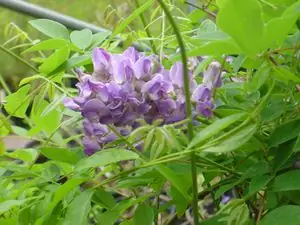
This is the wisteria of the Southeast, native from Virginia down through the Carolinas and Georgia to Florida and west to Texas, threading the margins of swamps, bottomland woods, and slow water. They do everything the Asian wisterias do, but with manners. The flower clusters are shorter and denser, lilac-blue with a fleck of yellow at the throat, and they arrive in early summer on the current season's growth, after the leaves are out rather than before, so the bloom comes cradled in green instead of strung on bare wood. They twine counterclockwise, flower within a couple of years instead of making you wait a decade, and, the part that matters most, they do not bolt for the canopy and strangle the trees the way their Asian cousins have quietly learned to do across the South.
A native that gives you the whole romance of wisteria, the drooping racemes, the soft drift of scent, without the fifty-year campaign to take back your porch. There is very little reason to plant the other one.
More to discover



Questions & discussion