

此頁面以其原始語言顯示,暫無翻譯版本。
Seedsun 精選
Aster tataricus
SKU: ASTE-TATA-01Q
Most asters have quit by the time Tatarian aster gets started. Aster tataricus opens in late September and keeps going through October and into November, still looking fresh at the first frost, on stems that stand five or six feet without a stake. The flowers are small, barely an inch across,.
索取客製報價
價格、包裝規格和供貨情況將在您的專屬報價單中確認。發送詢價並不代表您已下單付款。
詢問其適宜性、播種和生長要求。
請在報價單中確認送貨方式和所需文件。
品種介紹
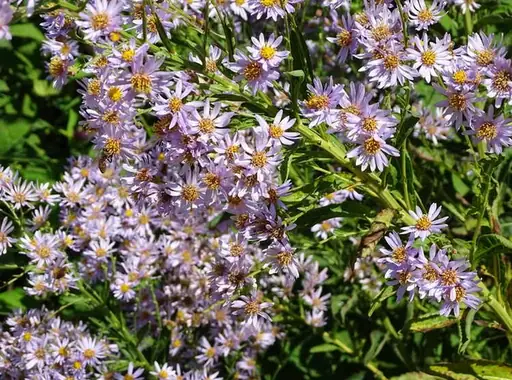
Most asters have quit by the time Tatarian aster gets started. Aster tataricus opens in late September and keeps going through October and into November, still looking fresh at the first frost, on stems that stand five or six feet without a stake. The flowers are small, barely an inch across, lavender-blue with a yellow eye, but they arrive in flat-topped clusters by the hundred, and at that height they read as a haze of color at eye level rather than a mound down at your knees.
The genus name comes from the Latin for star, after the shape of the flower. Worth noting for anyone who has followed the taxonomic upheaval in this family: when botanists dismantled the old genus Aster and moved nearly all the North American species into Symphyotrichum, the Old World species kept the original name. Tatarian aster is therefore a true aster, one of the very few any American gardener is likely to grow. Linnaeus the Younger described the species, native to southern Siberia, Mongolia, northern China, Korea, and Japan, where the plant grows in meadows and damp grassland.
The foliage is half the appeal and almost never mentioned. Basal leaves are paddle-shaped and frankly enormous, up to two feet long and six inches across, forming a bold coarse rosette that holds the ground all summer while the flower stems climb. Leaves diminish steadily upward, so the effect is a broad base tapering to a fine flowering head. Given rich moist ground the plant runs by rhizome and can build a substantial colony in a few years, which is a virtue in a meadow and a nuisance in a small border. Divide every three or four years to keep the clump in bounds, and expect no trouble: division is the simplest thing about this aster.
In China the roots carry a second life entirely. The dried root and rhizome of Aster tataricus is Zi Wan, one of the classic lung herbs of Chinese medicine, recorded in the Shen Nong Ben Cao Jing and in continuous use for something over fifteen hundred years for cough and phlegm, classically paired with coltsfoot flower. Modern phytochemistry has pulled well over a hundred compounds from the root, among them the triterpene shionone and a family of cyclic peptides called astins, and the species remains a subject of active pharmacological research in China, Japan, and Korea.
In the garden, put Tatarian aster at the back of a deep border, in a meadow, or anywhere a late wall of lavender ought to happen above shorter fall perennials. Full sun and ordinary well-drained soil are enough; rich moist ground produces the tallest growth and the only real risk of flopping. Monarchs staging for migration work the flowers hard, along with late bees and butterflies of every description.
Our stock came to from the JC Raulston Arboretum in Raleigh, an institution that has quietly seeded half the good plants in Southern gardens. also grew the compact selection 'Jindai' for years, found by Rick Darke and Skip March at the Jindai Botanical Garden in Tokyo. This is the straight species, taller and wilder, for gardeners with the room.
Incredible photos courtesy of JC Raulston Arboretum
您可能也感興趣



問題與討論